







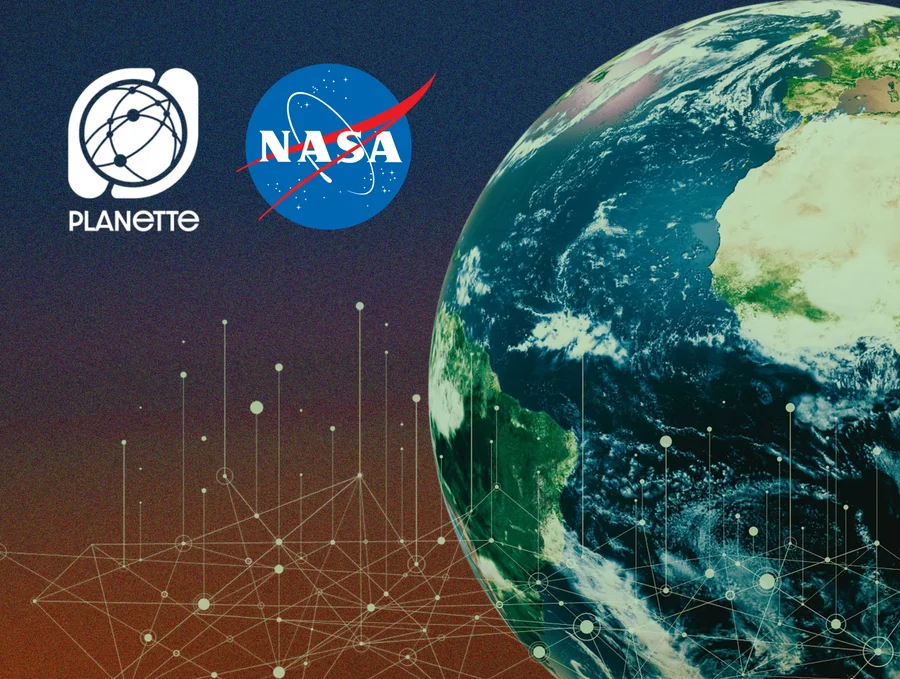
NASA Bets on “Quantum-Inspired” Skies—Taps Planette AI for 6-Month Storm Warnings
San Francisco start-up lands SBIR funding to build QubitCast, an energy-sipping model that treats Earth’s atmosphere like a quantum probability cloud—delivering hurricane, heat-wave and grid-stress alerts weeks to months ahead while running on ordinary CPUs.
The forecasting gap
Even the best super-computers lose skill after 10-14 days; seasonal models burn megawatts yet miss the “needles in the haystack” that spawn extreme events. NASA wants a 30- to 180-day heads-up for everything from Atlantic hurricanes to Midwest derechos.
Quantum inspiration, classical hardware
QubitCast uses tensor-network mathematics borrowed from quantum physics to explore millions of atmospheric trajectories simultaneously—but collapses the answer into probabilities that run on off-the-shelf GPU clusters. Result: 50× less energy than physics-based dynamical models, no cryo-cooled qubits required.
Phase-by-phase roadmap
- Phase I (now): 6-month prototype ingesting NASA’s MERRA-2 re-analysis, NOAA ocean temps and ESA soil-moisture records
- Phase II (late-2025): 1-km down-scaling for Gulf & Atlantic basins; beta API for emergency-management agencies
- Commercial spin-off (2026): SaaS dashboard for utilities, insurers and agri-traders at $0.02 per forecast grid-point
Dollars & data
NASA SBIR grant + NSF Phase I for NIVA Earth-model = US$1.7 m non-dilutive cash. Planette’s public-facing “Eddy” already serves 50 k free long-range outlooks per month; QubitCast will fold into the same UI.
Early adopters
Orlando Utilities Commission will test 45-day peak-load forecasts; Kansas wheat co-op will use 90-day soil-moisture outlooks to time irrigation and hedging.
Bottom line
If QubitCast delivers, the weather app on your phone won’t stop at Saturday’s picnic forecast—it’ll warn you in May how many named storms to expect by October, and tell grid operators when to fire up standby gas turbines long before the first cloud appears.